Drag

FanBank™
A databank to help you collect, control, value and trade your data.
Deliverables
SaaS Product Design, Design System, Visual Design
Client
Pumpjack Dataworks
Year
2020 - ongoing
Introduction
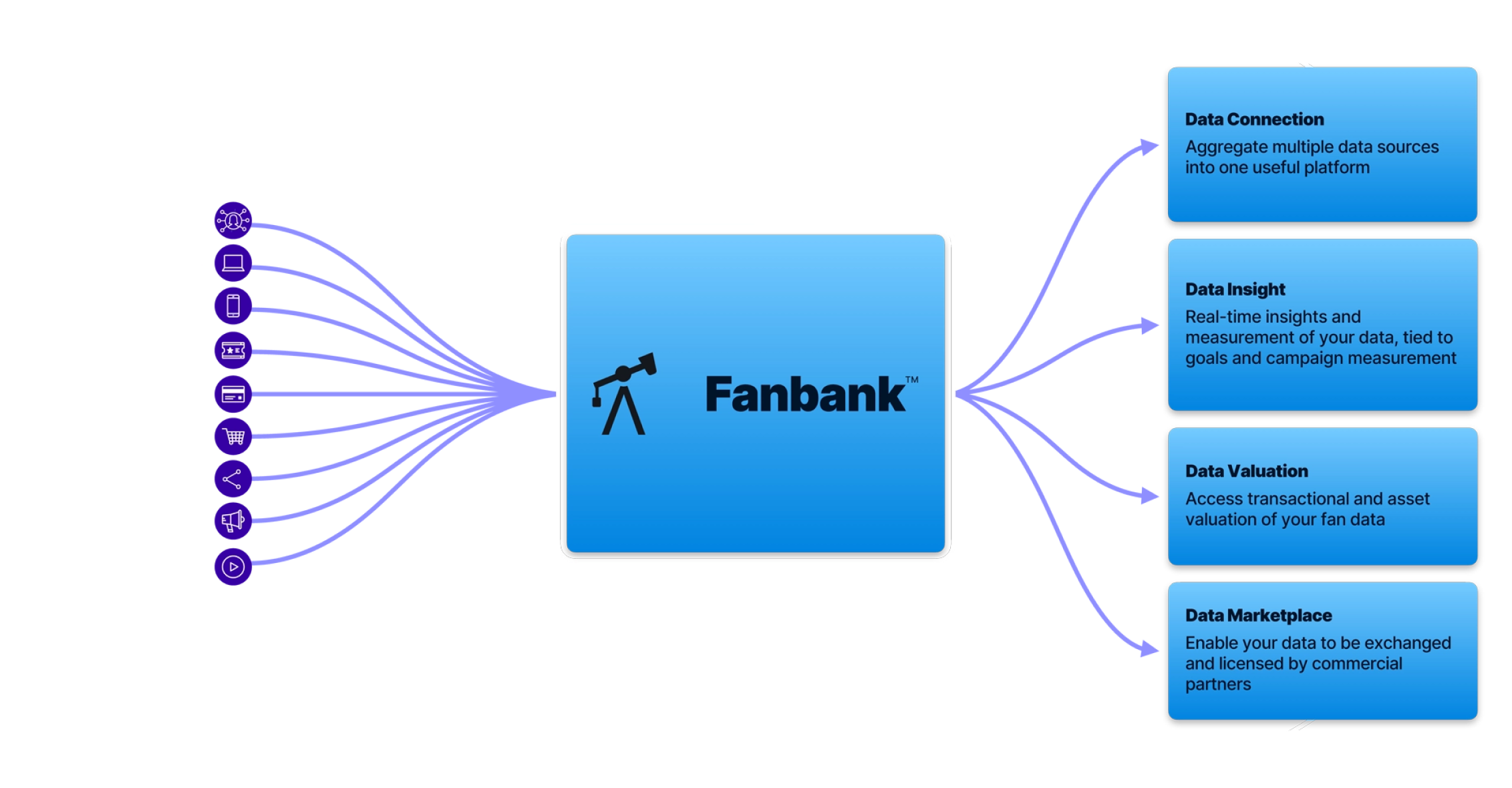
Pumpjack Dataworks’ FanBank is a cloud-based software service designed to help Sports organisations know their customer base and increase their value. It’s designed to help teams, leagues, and federations unify their fan data, understand its financial value, and enable the secure exchange of data assets with their business partners.
Rightsholders typically have small databases of fans, yet the actual number is multiples larger. Pumpjack collects, connects, and protects all of your fan interests together through a unified solution, and provides you with the tools to know each fan and how to engage with them intimately.
Teams, Leagues, and Federations worldwide use Pumpjack to know their community, frame their knowledge, and unlock new value.”
My Role
I was a UX/UI designer on the Fan Bank project at Pumpjack Dataworks, working closely with a lead designer, product owner, lead tech, and a remote development team. My role involved all stages of the product life cycle.
I started with user research and personas to help identify market needs. Using Agile methodologies, we tested hypotheses with clickable prototypes and iterated our solution to best suit the user needs and business requirements.
To help the company scale their products easily while maintaining consistency across all platforms, I also created a design system. The system includes a UI kit, component library, a grid system, and more.
Design system is an important part of the current system, and it’s always growing based on the new features and modules we add.
Challenges

Business owners face challenges accessing and managing data from various sources, resulting in missed growth opportunities and a lack of insights.

It can be challenging for businesses to identify the origin of data points from different sources, causing uncertainty around data accuracy and ownership.

Organisations struggle to determine the true value of their data.

Limited knowledge of their fan base is hindering teams and organisations in the sports industry from creating personalised marketing campaigns and providing a better fan experience.
Solutions
Unifying data sources and defining ownership
Data is at the heart of any successful business, and having a unified view of it is essential. This is where Fanbank comes in. Fanbank is a data platform that enables businesses to bring together data from all sources into one place. With Fanbank, businesses can access their data easily and use it to drive growth.
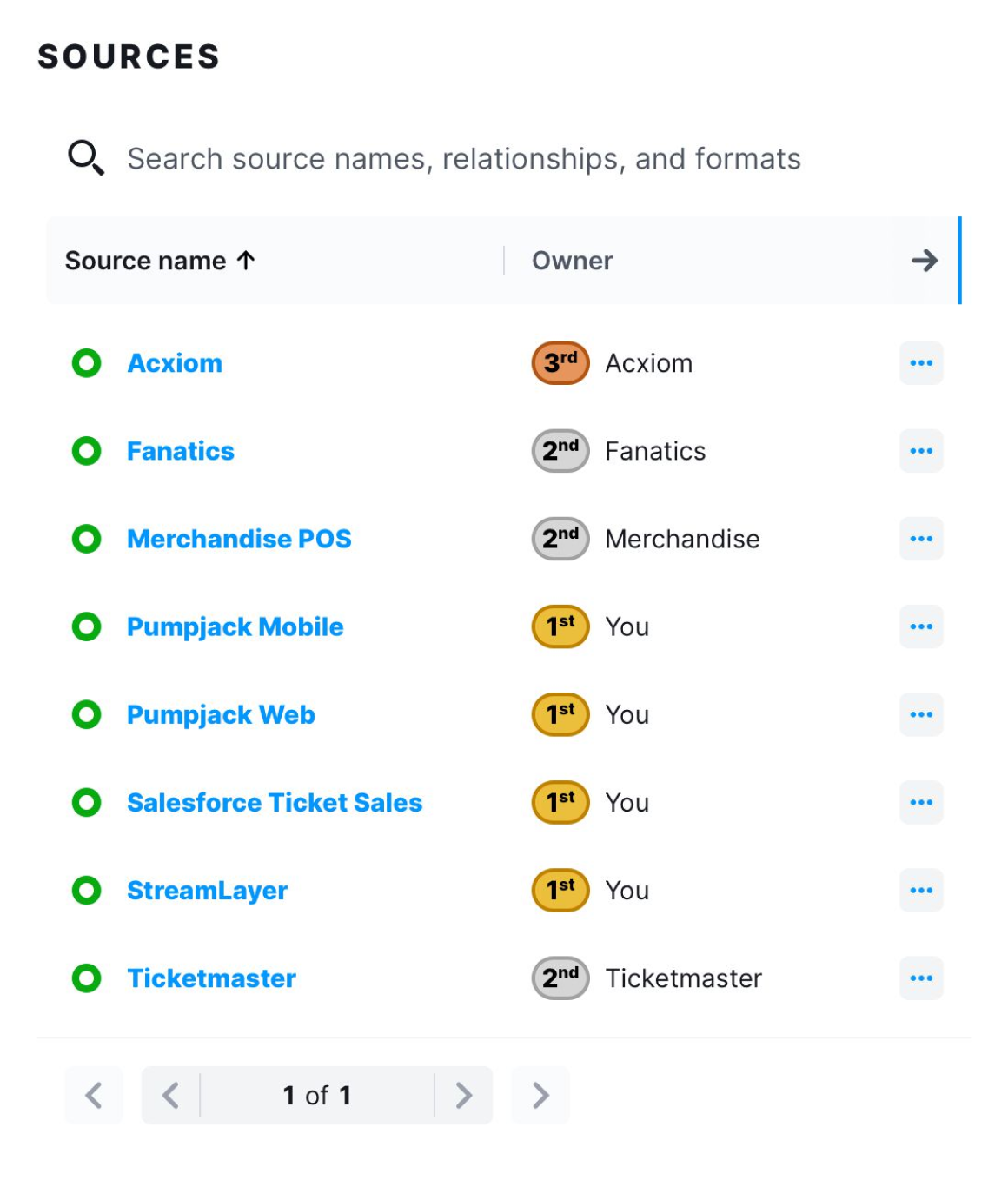
Fanbank recognizes the importance of clearly identifying the source of data and has taken measures to ensure that the owner name of the data is always visible. The platform classifies sources of data into three categories: first-party, second-party, and third-party.
First-party sources
First-party sources are operated by the customer or directly managed by the customer. The owner name shown will be "You" representing the Fanbank customer. Examples of first-party sources include Pumpjack analytics integrated into websites and apps, delta lakes and other warehouses managed by the customer, and survey results and other uploaded-file sources.
Second-party sources
Second-party sources are not operated by the customer but are obligated to the customer through an agreement with the operator. The owner name shown will be the brand name or company name of the operator. Examples of second-party sources include Ticketmaster, which operates this data source but is obligated to provide its customers with access to the data.
Third-party sources
Third-party sources are operated outside of any agreement with the customer and provide data that is not collected specifically for the customer. The owner name shown will be the brand name or company name of the operator. An example of a third-party source is Acxiom, which collects its data without any obligation to the customer.
The Audience Selector - ability to filter data that you need
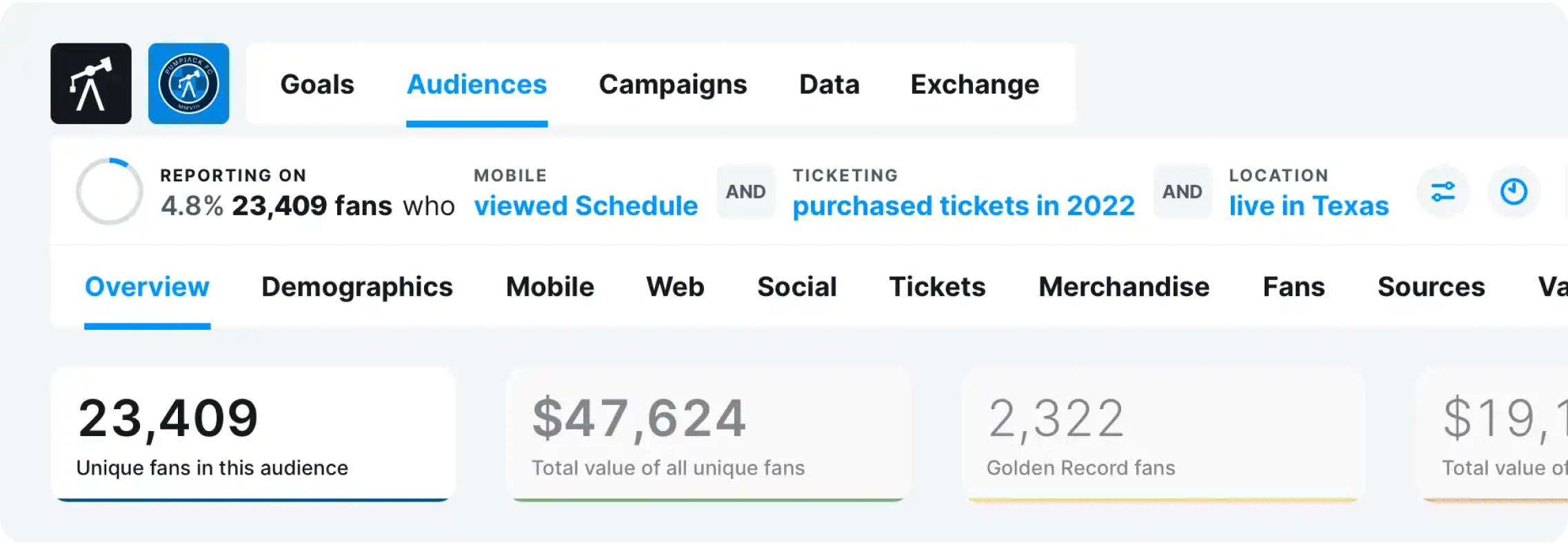
Now that we have unified data in one place. We need users to be able to filter the data for their specific needs. The Audience Selector is a powerful tool for clients looking to filter their audience data from a variety of sources. With the ability to select from multiple data sources, including first-party, second-party, and third-party sources, clients can tailor their audience to their specific needs.
For example, let's say a client is interested in targeting fans between the ages of 25 and 35 who live in a specific location and have an interest in sports. The Audience Selector allows the client to filter the data based on these specific criteria, providing a targeted audience that is ideal for their marketing campaign.It also allows users to save these Audiences to be able to share and be viewed by others. This will be very important later when we work on the rest of the modules specifically the market place.
The Audience Selector is a valuable tool for clients looking to optimize their marketing efforts and drive results. By filtering their audience data, clients can increase the effectiveness of their campaigns, and ultimately achieve their business goals.
Audience Analytics
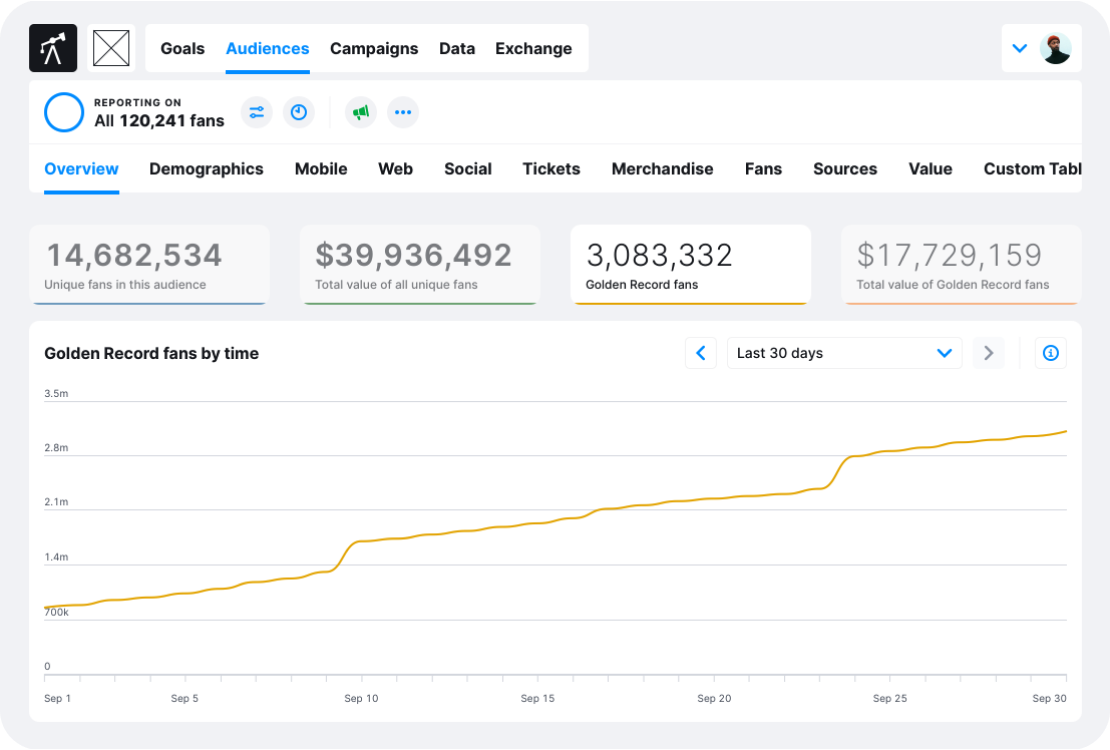
Once the clients have selected their ideal audience using the Audience Selector, they can analyze and measure insights using our comprehensive data analytics.
Overview
Provides an overall summary of the audience, including the total number of users, their engagement levels, and their behavior across different channels.
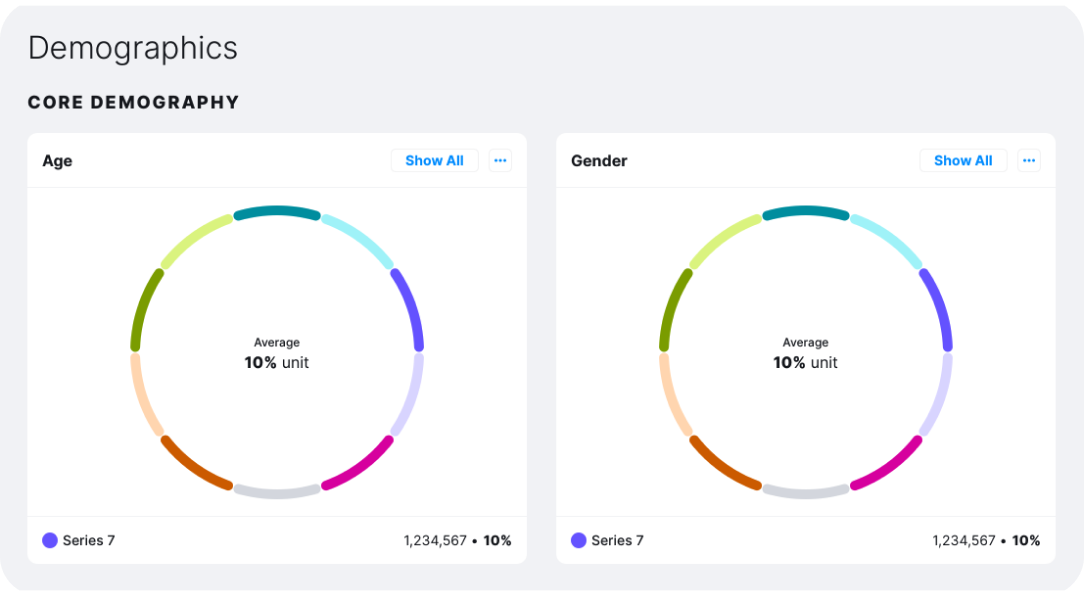
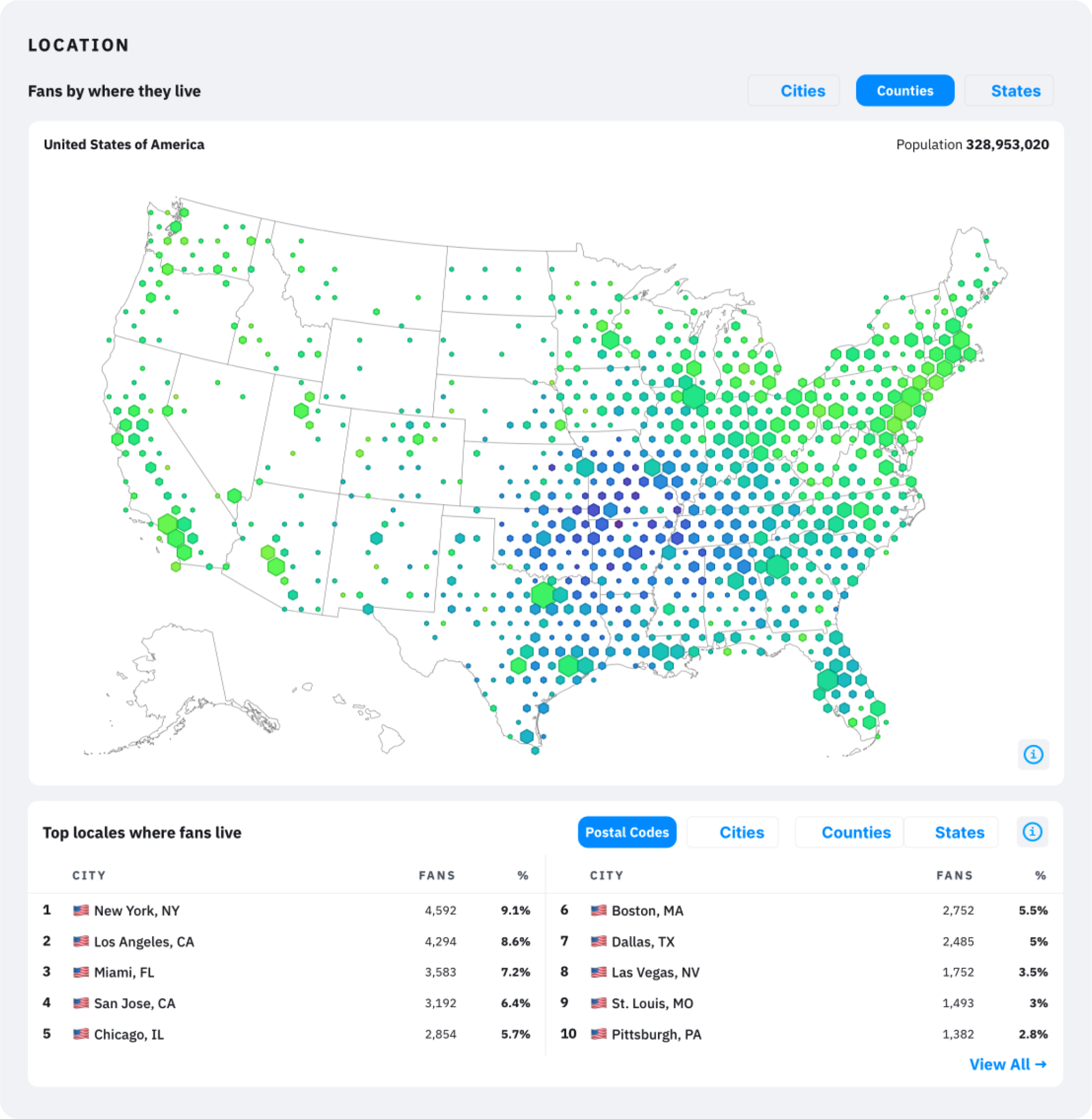
Demographics
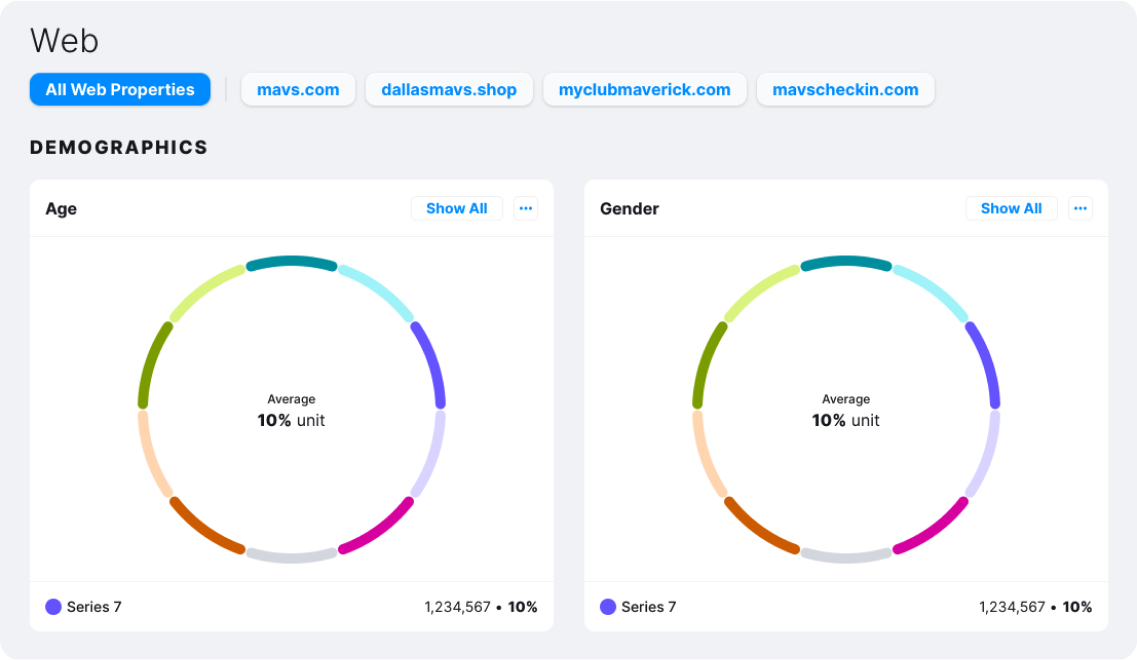
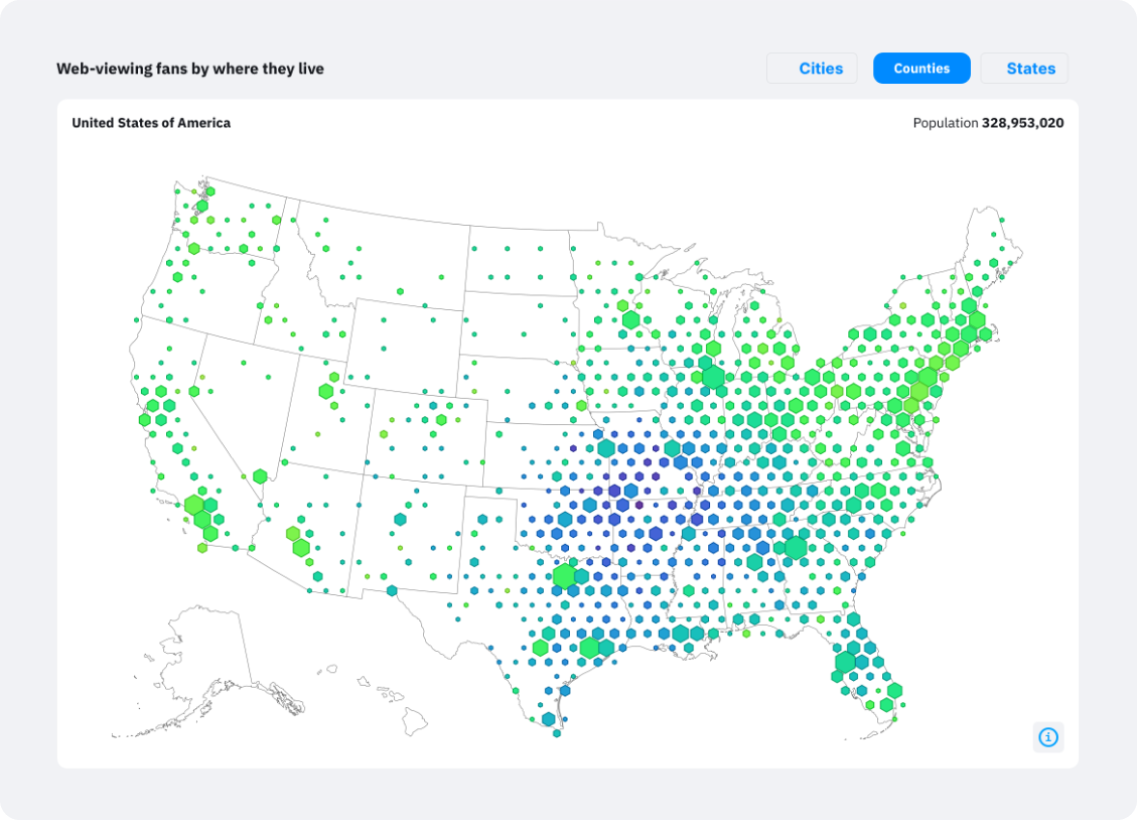
Offers insights into the audience's characteristics such as age, gender, location, education, and income. This helps clients understand their audience and tailor their marketing efforts accordingly.
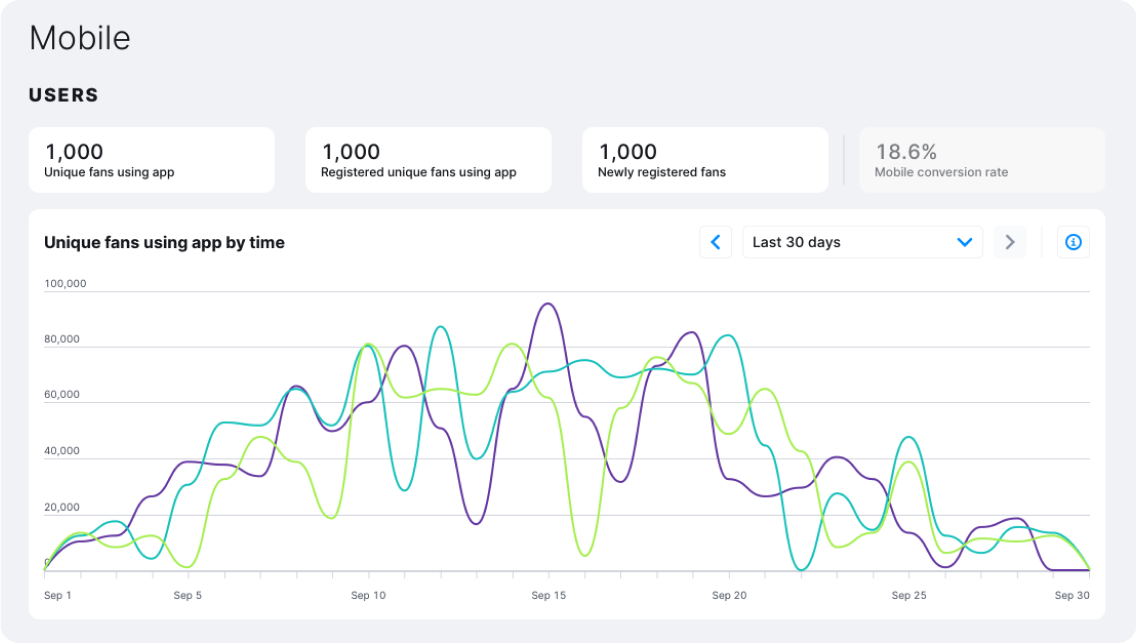
Mobile
Analyzes the audience's mobile activity, including app usage, push notifications, and in-app purchases. This helps clients to understand how their audience interacts with their mobile app and optimize their mobile marketing strategy.
Web
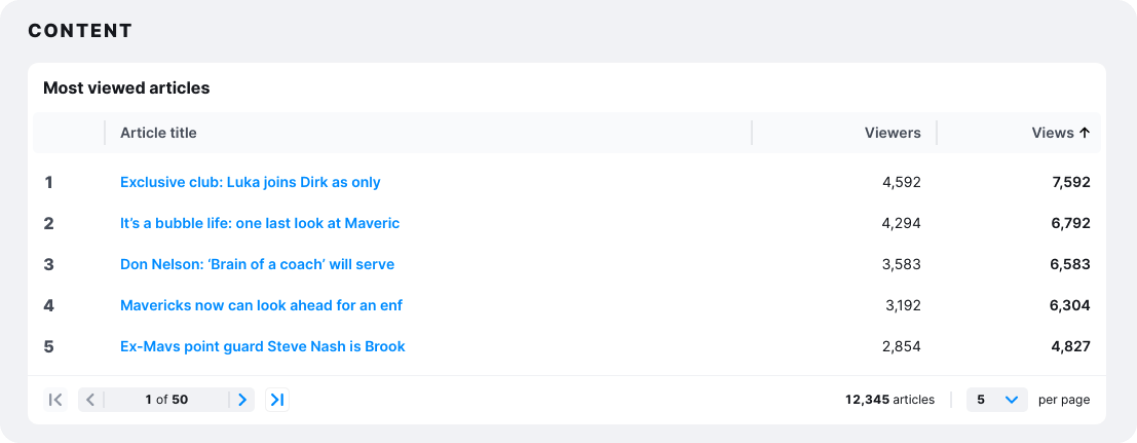
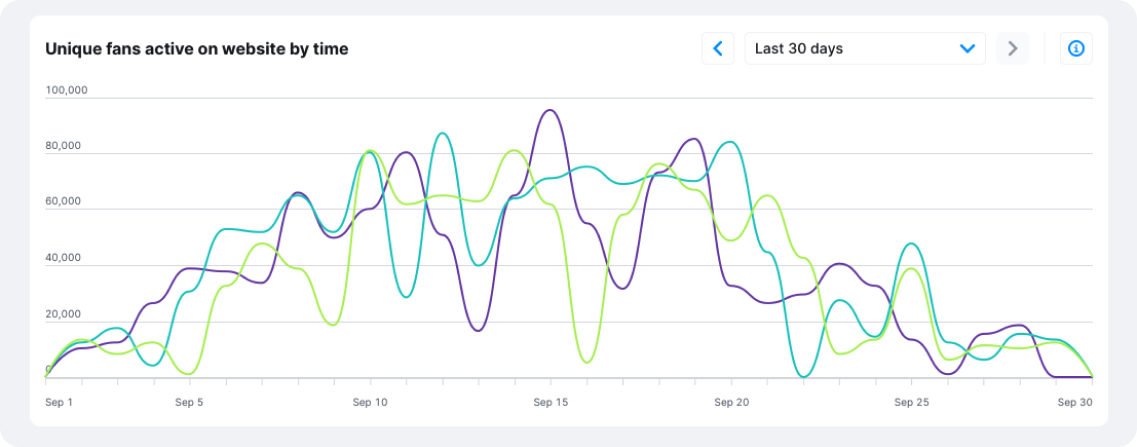
Tracks the audience's web behavior, including page views and active fans on the site. This helps clients to understand how their audience interacts with their website and optimize their web marketing strategy.
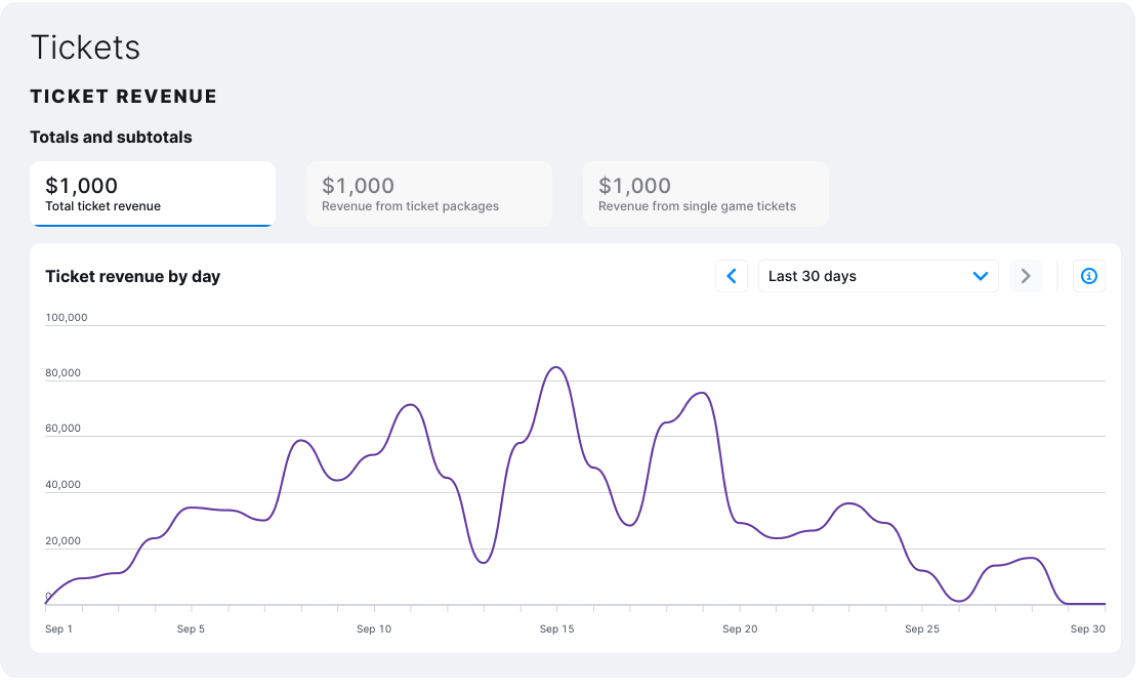
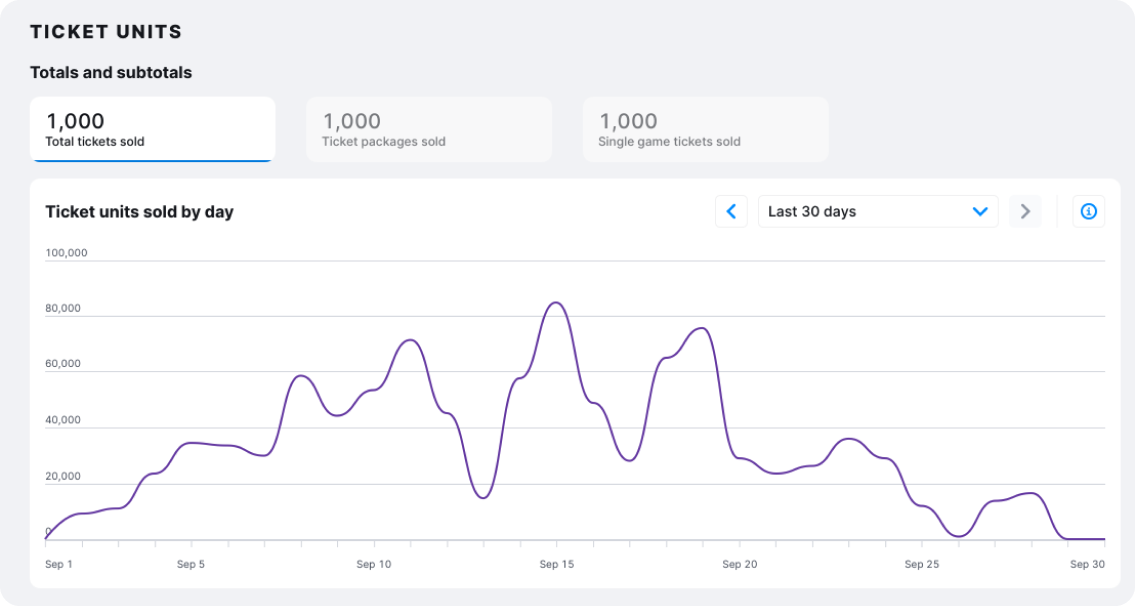
Tickets
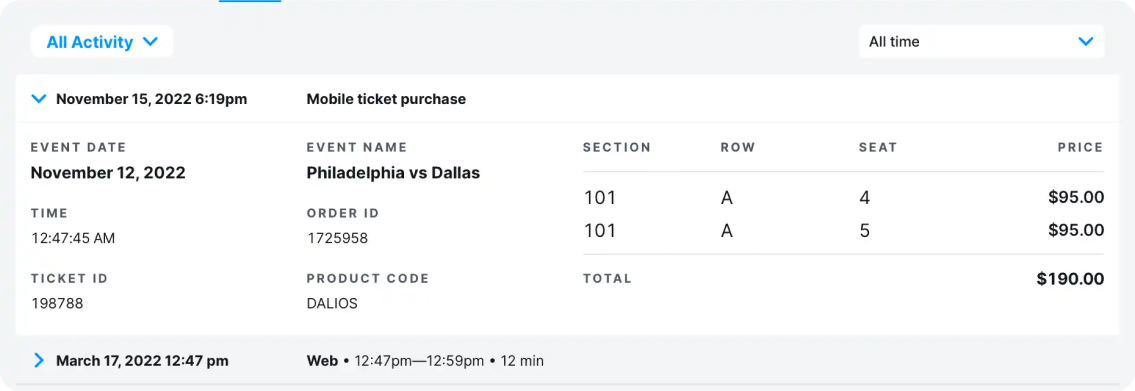
Provides data on the audience's ticket purchases, including the number of tickets sold, the average ticket price, and the revenue generated. This helps clients to understand which events are most popular and to adjust their pricing and marketing strategies accordingly.
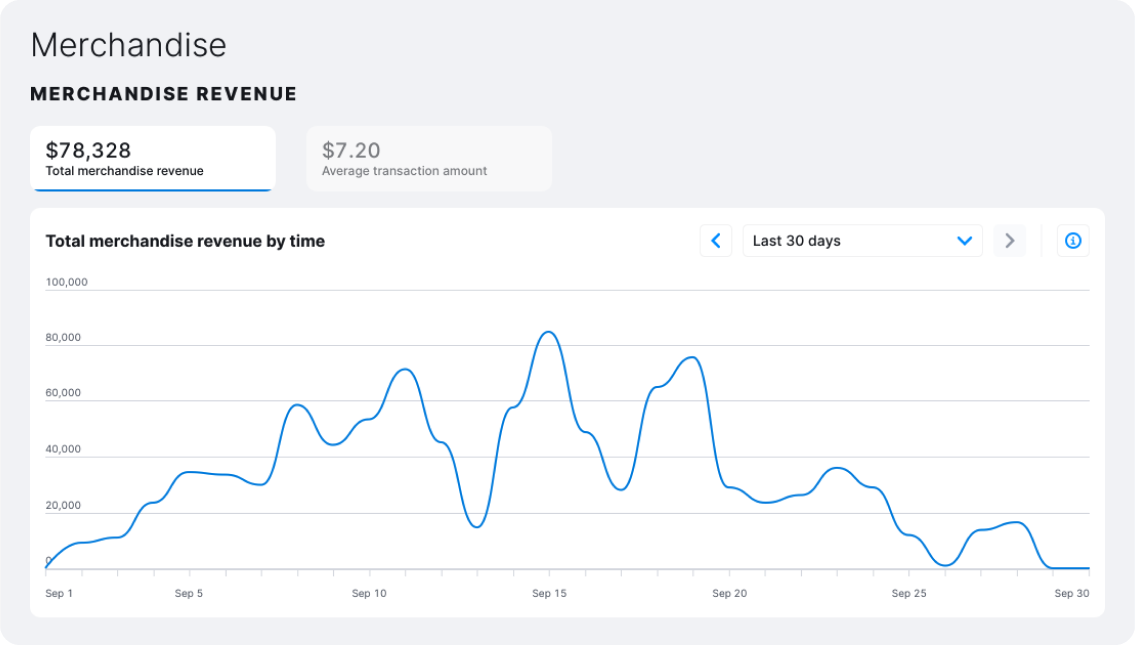
Merchandise
Analyzes the audience's merchandise purchases, including the best-selling products, the average order value, and the revenue generated. This helps clients to understand which products are most popular and to optimize their merchandise strategy.
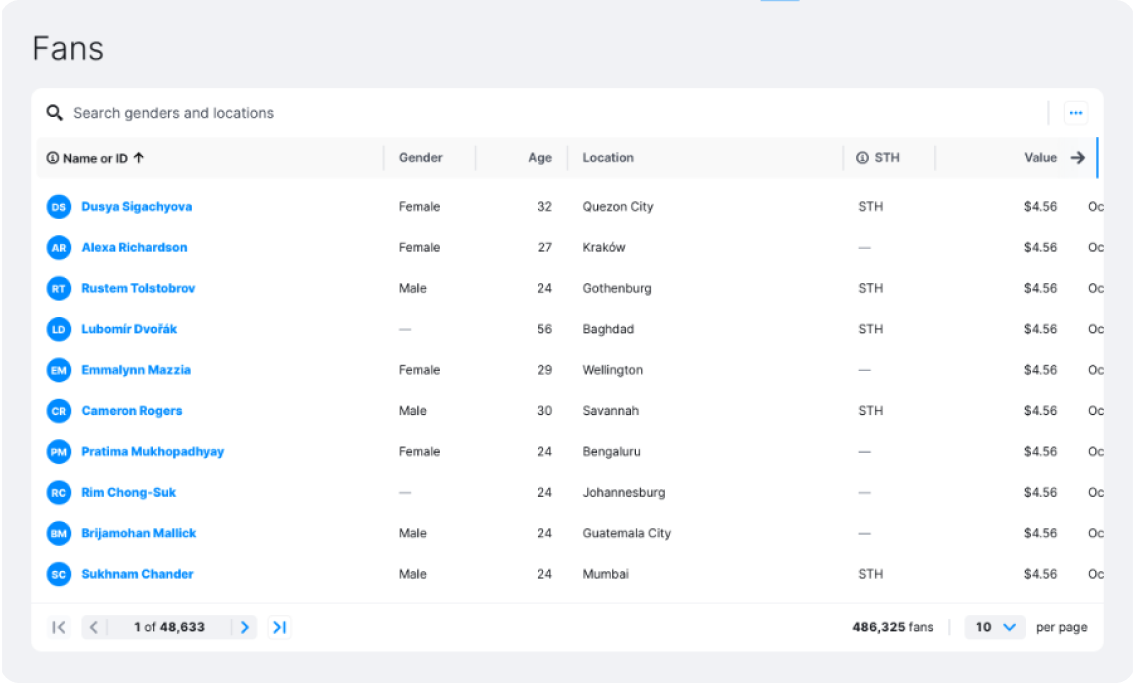
Fans
Provides a detailed view of the audience's engagement levels, including their interactions on social media, email campaigns, and other marketing channels. This helps clients to understand these fans and understand the value at the fan profile level.
Value
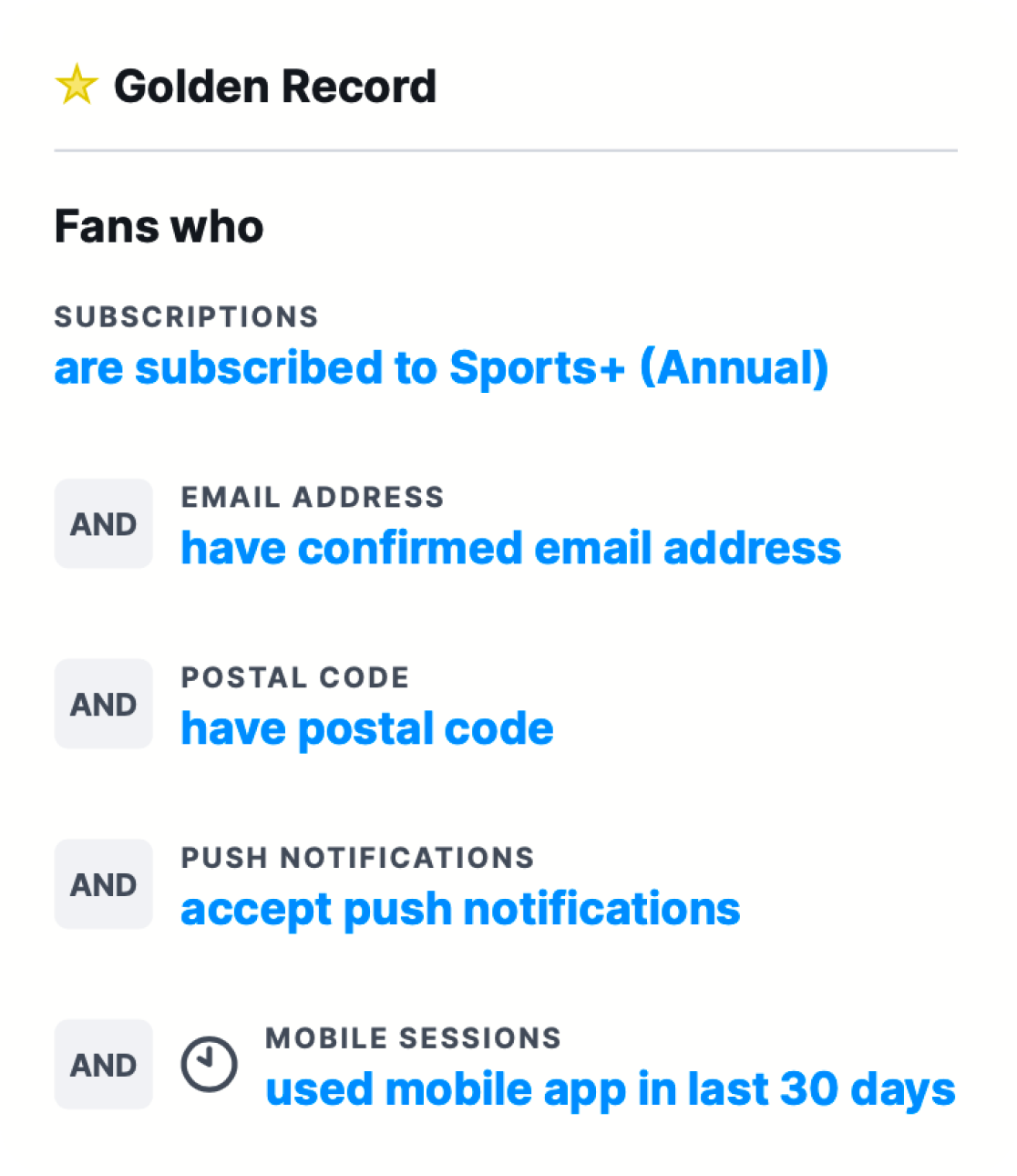
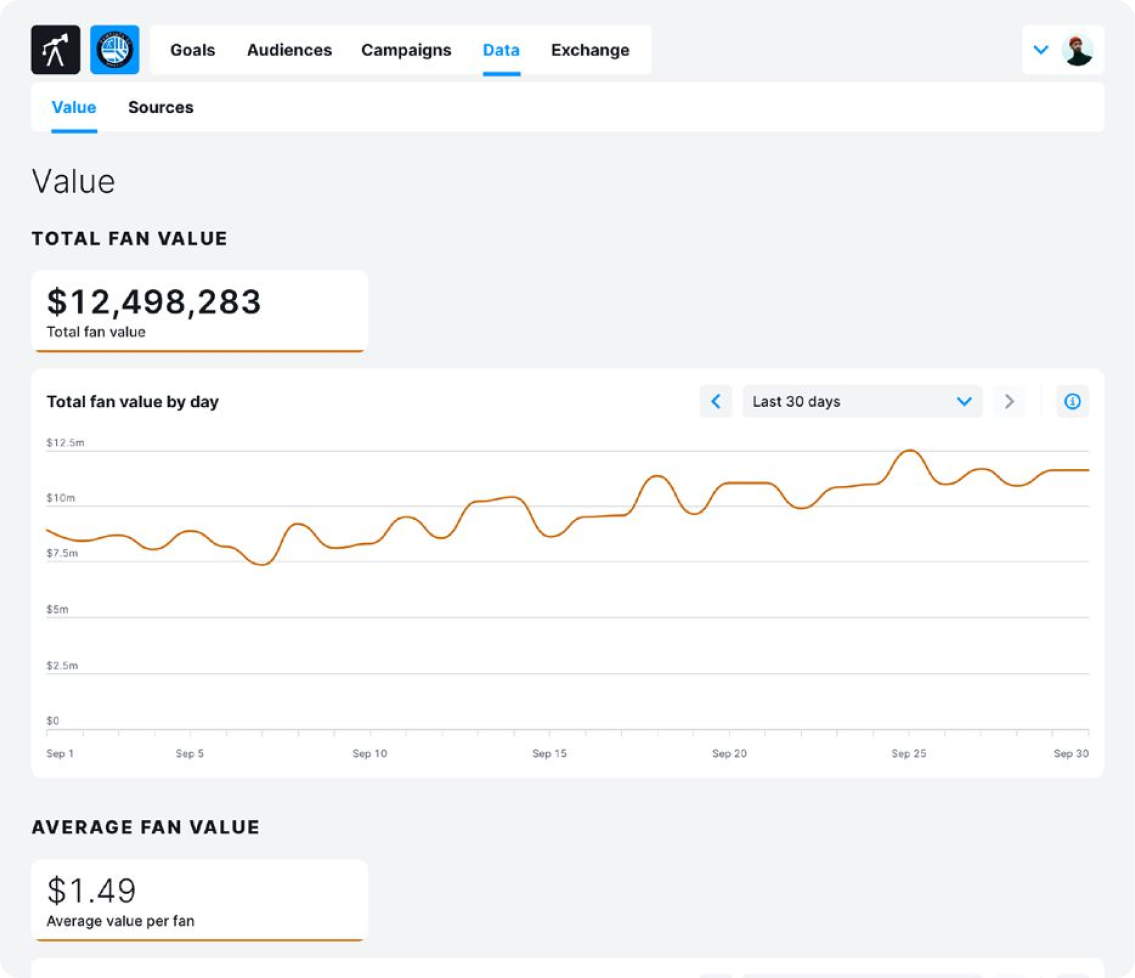
To make it easier for our clients to understand the value of their data, we've developed a unique engine that puts dollars to data, allowing them to instantly update their understanding based on market conditions and new insights.
1. Knowing your traits
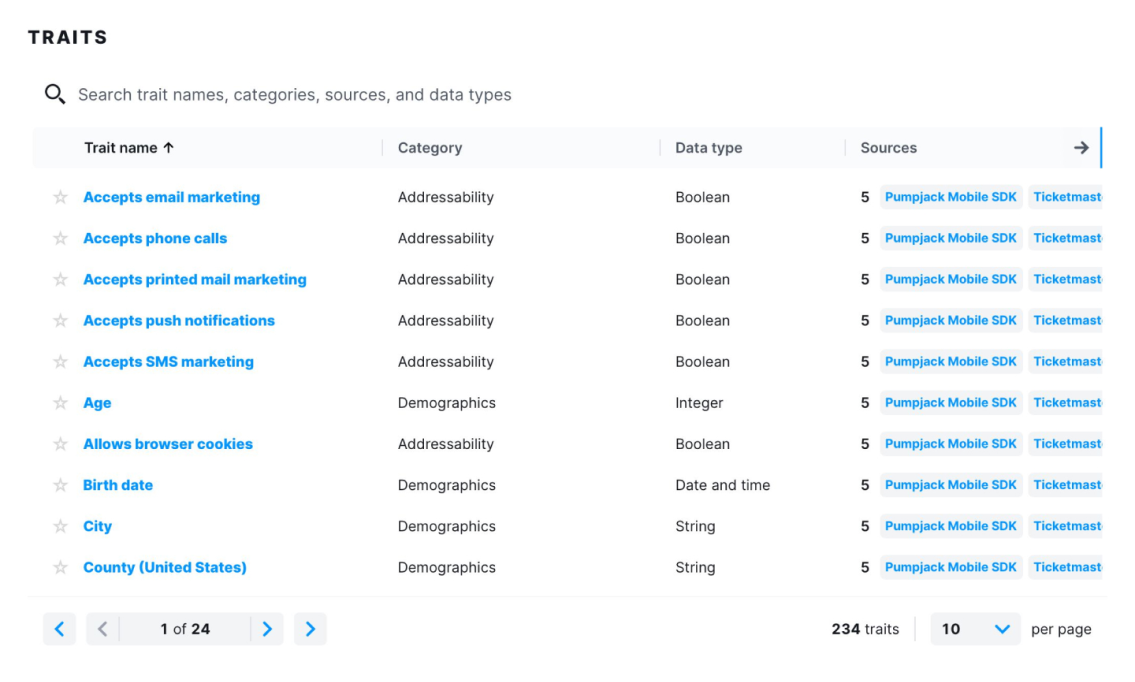
The first step in understanding the value of your data is to know your traits. We've created a trait dictionary that includes everything from basic demographic information to communication preferences, purchased items, and checked-in locations. All of these traits can be valued. To get started, simply select the traits that are most important to you.
2. Setting up your points
Next, you'll need to set up your points with one of three rulesets: Boolean, Range, or Exact match. Boolean rules are used for Boolean traits, like whether a fan has stated a trait or not. Range rules work best for numeric traits, like age, spending, or time since their last activity. Exact match rules work best for text-based traits, like device type, gender, or place names.
3. Mapping Category values to your traits
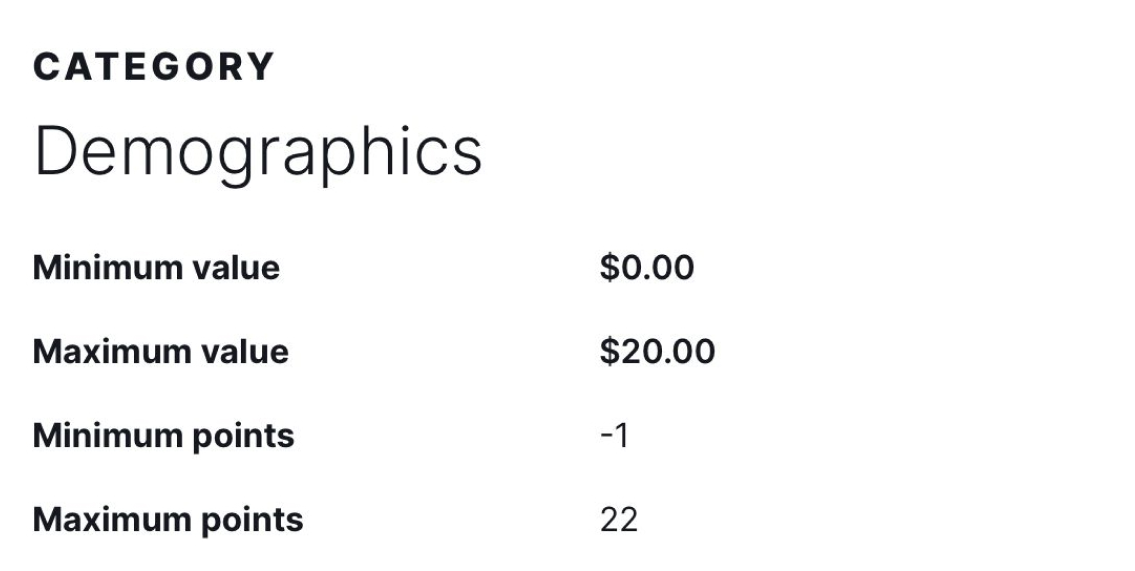
Each trait is given a category, and each category has a minimum and maximum value. All the possible minimum and maximum points for all traits in each category are added up, then linearly mapped to the category's value range. This process helps us to put dollars to data and helps you to understand the value of your data more easily.
4. Add up the values of the categories
Once your points have been set up, and your categories have been mapped, it's time to add up the values of the categories. This will give you a clear understanding of how much your data is worth.
5. Show your work
Finally, we allow you to show your work by demonstrating how traits build up to value, and how fans and profiles do too. This makes it easy for you to understand the value of your data and to engage with your fans in more unique and authentic ways.
User Roles
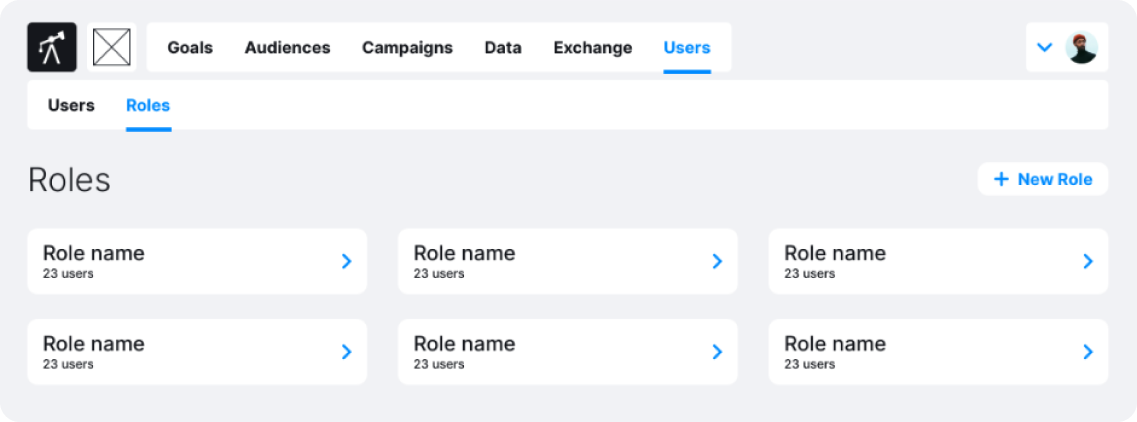
Fanbank's User Roles feature allows clients to create customized roles and permissions for their team members, providing enhanced security and control over their Fanbank account. With User Roles, clients can assign specific access levels to their team members, ensuring that they have the right level of access and control for their roles.
For instance, clients can create an Admin role for themselves with full access to all features, while creating a more restricted role for their team members who only require access to specific functions. This helps to reduce the risk of unauthorized access and ensures that each team member has access to the tools and information they need to perform their job effectively.
The User Roles feature also enables clients to control the visibility of sensitive data and functionalities, such as financial information, customer data, and account management functions. Clients can create different roles for different teams or departments, allowing them to manage access and permissions based on their needs.
Data Exchange
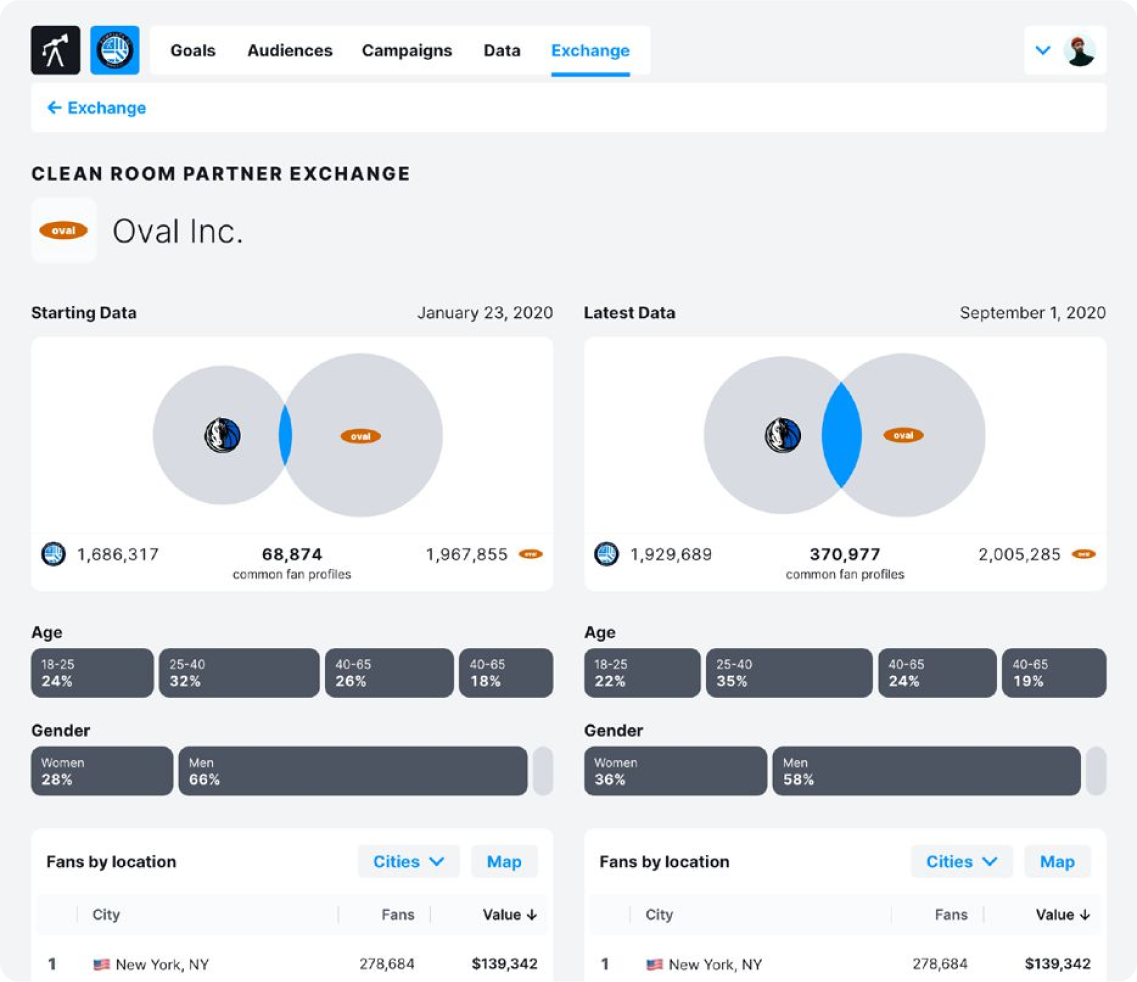
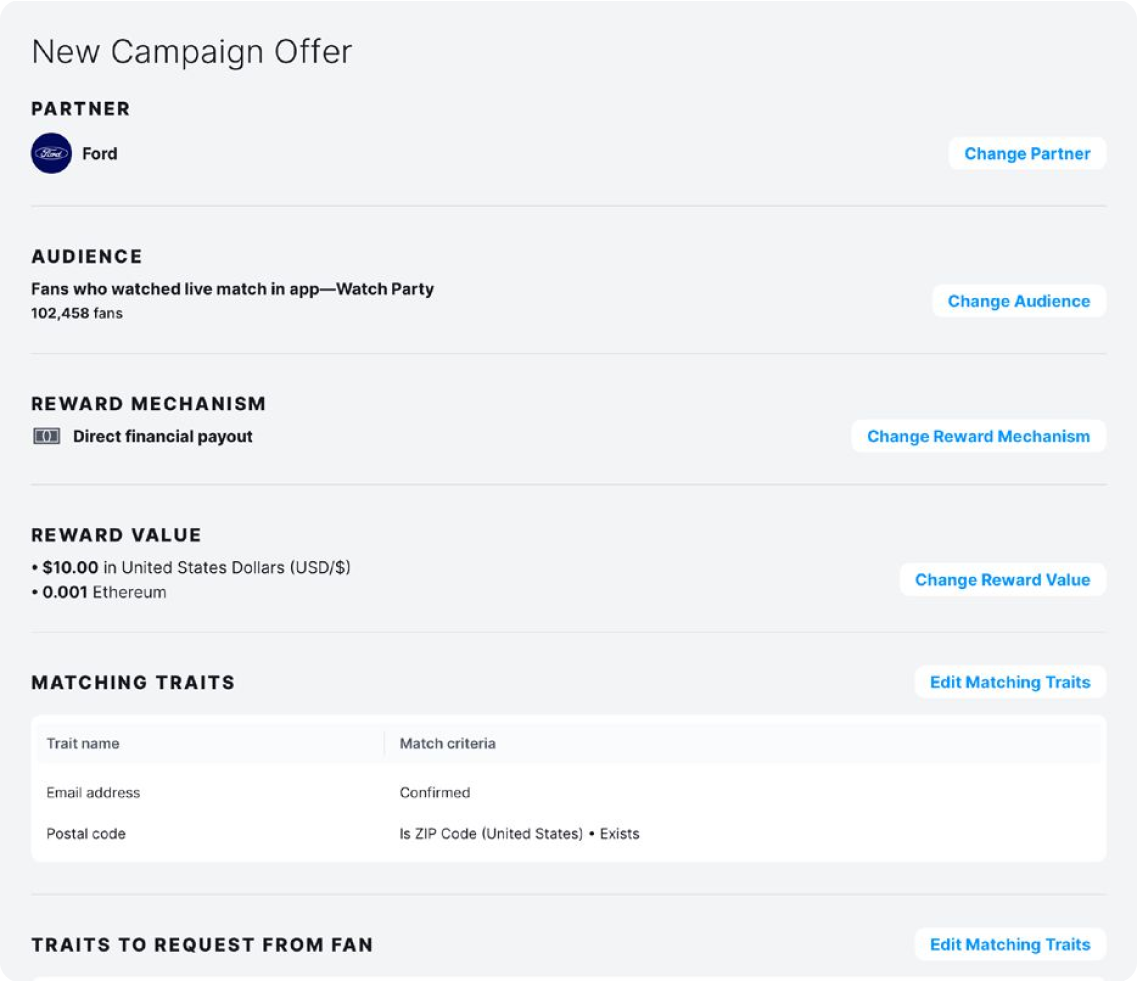
Fanbank Marketplace is a powerful platform that enables businesses to buy, sell, and trade anonymized and non-identifying data points. It allows businesses to access valuable data that can help them make informed decisions and engage with their fans more effectively.
The marketplace is divided into two categories: B2B and B2B2C. In the B2B section, businesses can buy and sell data points with their partners and other businesses. This is a great way for companies to get the data they need to make informed decisions and improve their marketing and advertising campaigns.
Design System
As the company grew, we found that our visual design was becoming inconsistent, and our user experience was becoming increasingly fragmented. In order to solve this problem, they embarked on a project to create a new design system that would provide a unified visual language and improve the user experience across all their products.

Provide a consistent and cohesive visual design across all Fanbank products

Streamline the design and development process for new products and features

Improve the usability and accessibility of Fanbank products for all users

Increase brand recognition and awareness through a unique and recognizable design system
As the company grew, we found that our visual design was becoming inconsistent, and our user experience was becoming increasingly fragmented. In order to solve this problem, they embarked on a project to create a new design system that would provide a unified visual language and improve the user experience across all their products.
Design Principles
Based on the research findings, a set of design principles were established that would guide the creation of the design system. These principles included a focus on simplicity, accessibility, and consistent visual language.
Component Library
With the design principles in place, the team began developing a component library that would provide a set of pre-designed UI elements that could be used to quickly and easily build new products and features. The library included components for navigation, forms, buttons, typography, and more.
Iteration and Refinement
Throughout the prototyping phase, the design system was continually refined and improved based on feedback from users and stakeholders. This involved making adjustments to the component library, design guidelines, and prototyped products based on user testing and data analysis.
Let’s Get in Touch!
I'm available for both full-time and contract gigs, so let's chat and see how I can help bring your project to life.
Connect with me on
Follow me on
Hire me here
UI/UX DESIGN - MOTION DESIGNER - CREATIVE DEVELOPER - HIRE ME - SHAHEER AHMED - UI/UX DESIGN - MOTION DESIGNER - CREATIVE DEVELOPER - HIRE ME - SHAHEER AHMED - UI/UX DESIGN